Facebook
 X
 Pinterest
 Copy Link
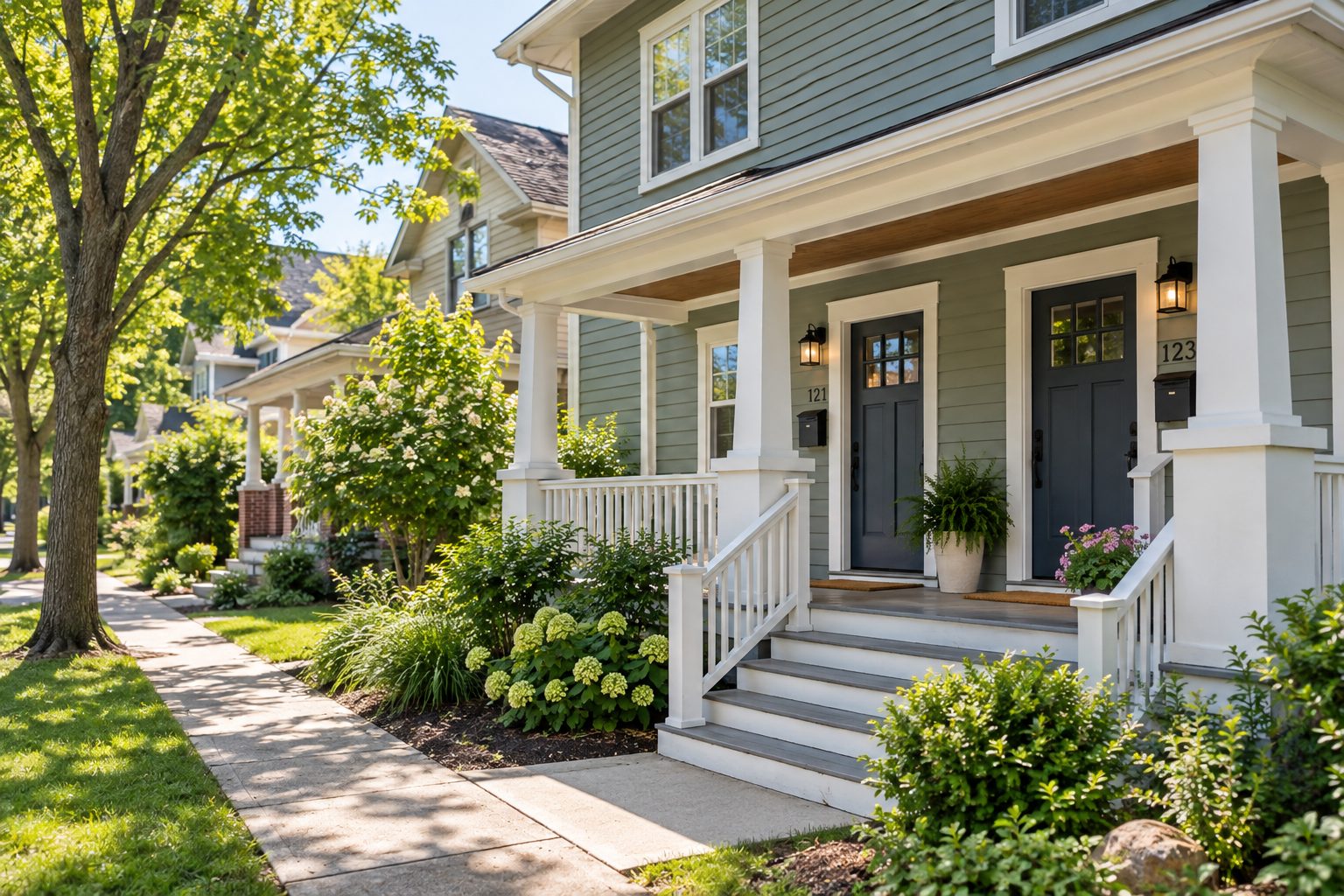
Buying your first investment property does not necessarily mean buying a home you will never live in.
For some first-time investors in Southeast Michigan, a more approachable way to get started is house hacking: buying a property as your primary residence and renting out part of it to help offset the cost of ownership.
That could mean buying a duplex and living in one unit while renting the other. It could also mean owning a single-family home and renting a bedroom, or buying another type of property where the layout and local regulations allow part of the property to be rented.
The idea sounds simple. But before buying a property based on its rental potential, it is important to understand the financing, numbers, property taxes, landlord responsibilities, and local rules that come with it.
What Is House Hacking?
House hacking generally means living in a property you own while generating rental income from another part of the property.
Common examples include:
- Buying a duplex and living in one unit while renting the other
- Buying a triplex or four-unit property, occupying one unit, and renting the remaining units
- Renting a bedroom or other permitted portion of a single-family home
- Purchasing a home with an accessory dwelling unit, where the unit is legally permitted and local regulations allow it to be rented
The rental income may help offset your mortgage, property taxes, insurance, maintenance, and other housing expenses.
But house hacking should not be confused with having someone else simply pay your mortgage. You are buying a home and becoming a landlord, which creates additional financial and legal responsibilities.
Why House Hacking Can Appeal to First-Time Investors
One of the biggest barriers to real estate investing is the amount of money needed to purchase an investment property.
An owner-occupied property may have financing options that differ from financing for a property purchased strictly as an investment. Depending on the loan program, property, and borrower qualifications, this can potentially reduce the upfront barrier to buying a small multifamily property.
Another potential advantage is experience.
Instead of learning how to own and manage a rental property from a distance, you are living at the property. You get firsthand experience with maintenance, leases, tenants, operating expenses, and the realities of owning income-producing real estate.
That experience can be valuable if your long-term goal is to own additional rental properties.
Financing a House Hack in Southeast Michigan
Financing should be one of the first conversations you have, not something you figure out after finding the property.
FHA financing, for example, can be used for qualifying owner-occupied properties with one to four units. FHA’s minimum required investment is generally 3.5% of the adjusted value, subject to borrower, property, and program requirements.
There are additional rules for multifamily properties. FHA three- and four-unit properties, for example, are subject to a self-sufficiency calculation based on the property’s rental income.
Conventional financing may also be available for owner-occupied two- to four-unit properties. Under current Fannie Mae guidelines, qualifying rental income from a two- to four-unit principal residence may be considered, but how much income can be used and what documentation is required depends on the borrower’s circumstances and the loan.
If you are new to the buying process, understanding the difference between an appraisal and a home inspection in Michigan is also important, especially when considering a multifamily property.
This is why I would involve a lender who regularly handles owner-occupied multifamily properties before building a search around a particular financing strategy.
A property producing $3,000 per month in potential rent does not automatically mean a lender will give you credit for $3,000 per month when qualifying you for the mortgage.
Run the Numbers Without Assuming Everything Goes Right
This is where I think first-time investors need to be especially careful.
It is easy to look at a duplex and calculate:
Mortgage payment minus rent from the other unit = my housing cost.
But that calculation leaves out quite a bit.
A more realistic analysis should consider:
- Principal and interest
- Property taxes
- Homeowners or landlord-related insurance costs
- Utilities you will be responsible for
- Routine maintenance
- Larger future repairs and replacements
- Vacancy
- Rental licensing or inspection expenses
- Lawn care and snow removal, if applicable
- Unexpected repairs
- Potential changes in rent or operating expenses
If you are trying to build a more realistic ownership budget, it also helps to understand how much to budget for home maintenance in Michigan.
For example, if the furnace needs replacement shortly after closing, the fact that the other unit is rented does not make that expense disappear.
I would rather see a first-time investor buy a property that still makes sense under conservative assumptions than one that only works when every number goes perfectly.
Michigan Property Taxes Need a Closer Look
Property taxes deserve special attention when evaluating a house hack in Michigan.
Michigan’s Principal Residence Exemption, or PRE, exempts a qualifying principal residence from local school operating millage of up to 18 mills. To qualify, the property generally must be owned and occupied as the owner’s principal residence.
Income-producing properties can become more complicated.
Michigan Treasury specifically addresses situations such as owner-occupied duplexes, apartment buildings where the owner occupies one unit, and single-family homes where the owner rents rooms. The tax treatment and the portion eligible for certain homeowner tax benefits can depend on how the property is occupied and used.
Do not assume that the tax treatment shown for the current owner will automatically be your tax treatment after purchase.
When analyzing a property, I recommend confirming the current taxable value, millage information, PRE status, and likely treatment after the sale with the local assessor. For tax advice specific to your situation, speak with a qualified tax professional.
Becoming a Michigan Landlord Comes With Responsibilities
Once you rent part of your property, you are not only a homeowner.
You are also a landlord.
Michigan law regulates areas such as residential leases, security deposits, property condition, and landlord and tenant responsibilities.
For example, Michigan’s current landlord-tenant guidance states that a security deposit generally cannot exceed 1.5 times the monthly rent. There are also requirements governing how security deposits are handled, move-in inventory checklists, notices, and the return or use of deposits.
Michigan law also requires residential rental premises and common areas to be fit for their intended use and generally requires landlords to keep the property in reasonable repair and comply with applicable health and safety laws.
This is one reason I would not treat the lease as a formality. Before renting a unit or room, understand the current state and local requirements and use appropriate professional guidance when needed.
Local Rental Rules Can Change the Equation
This is especially important in Southeast Michigan because rental requirements are not identical from one municipality to another.
A property may physically look perfect for house hacking but still be subject to local registration, inspection, zoning, occupancy, or licensing requirements.
Ann Arbor is a good example. The City requires residential rental properties to comply with its rental housing program, and a dwelling or rooming unit generally cannot be made available for rental occupancy without a current Certificate of Compliance.
Other Southeast Michigan municipalities may have different requirements.
Before purchasing a property specifically because you intend to rent part of it, verify:
- Whether the proposed rental use is permitted
- Whether the property must be registered
- Whether an inspection or rental certificate is required
- Whether there are occupancy or zoning restrictions
- Whether the property’s existing configuration is legally recognized
Do this before relying on projected rent in your investment analysis.
Older Southeast Michigan Homes Deserve Extra Attention
Southeast Michigan has a large supply of older housing, particularly in established communities.
That is not necessarily a problem, but an older property being considered as a rental deserves careful inspection and budgeting.
Homes built before 1978 may also have lead-based paint considerations. Federal law requires certain lead disclosures for most pre-1978 housing offered for rent, and Michigan provides additional resources for understanding lead hazards.
Before buying, it also helps to understand what to expect during a Michigan home inspection and where the inspection fits into the purchase process.
Beyond lead paint, I would pay particular attention to the age and condition of major systems such as:
- Roof
- Foundation
- Electrical system
- Plumbing
- Sewer line
- Furnace and air conditioning
- Windows
- Water heater
With a house hack, a major repair affects not only your investment return. It can also affect your own living situation and your responsibilities to a tenant.
Duplex, Triplex, Four-Unit, or Single-Family Home?
There is no single property type that is automatically the best house hack.
A duplex can offer clearer separation between the owner and tenant because each household has its own unit.
A three- or four-unit property may produce more rental income, but it also means more units, more tenants, more maintenance, and potentially additional financing requirements.
Renting a room in a single-family home may appear simpler from a property standpoint, but sharing your home with a tenant creates a very different living arrangement.
If you are still deciding what type of property fits your investment plans, you may also want to compare single-family homes and condos as Michigan investment properties.
The better question is not:
Which type makes the most money?
It is:
Which property works financially while also being something I am comfortable owning, living in, and managing?
Those are not always the same property.
Look at the Property as Both a Home and an Investment
This is one of the biggest differences between house hacking and purchasing a traditional investment property.
You actually have to live there.
A spreadsheet might tell you that one property has the better projected return. But if the layout, condition, parking arrangement, maintenance demands, or owner-tenant setup does not work for you, the better spreadsheet may not make it the better purchase.
At the same time, you do not want to evaluate the property only as your home and ignore the investment side.
Before making an offer, I would want to understand both:
As a home:
Can I comfortably live here?
As an investment:
Does the rental income realistically support the numbers after accounting for expenses, vacancy, repairs, and reserves?
A good house hack needs to survive both tests.
What Happens When You Eventually Move Out?
This should be part of the analysis before you buy.
Suppose you live in one unit of a duplex for several years and later purchase another home.
Would you want to keep the duplex and rent both units?
If so, what might the property look like financially when it is fully rented?
You would need to reconsider expenses, property-tax treatment, insurance, management, maintenance, and rental income once the property is no longer your principal residence.
Thinking about that future scenario can help you distinguish between a property that simply lowers your housing cost today and one that may also fit your longer-term investment plans.
Questions to Ask Before Buying a House Hack in Southeast Michigan
Before moving forward, I would want answers to questions like:
- Is the property legally configured for the way I intend to use it?
- Does the municipality allow the proposed rental arrangement?
- What rental registration or inspection requirements apply?
- What rent is realistically supported by comparable rentals?
- How much of that rental income will my lender allow me to use for qualification?
- What will my property taxes likely look like after purchase?
- What expenses will I pay that tenants will not?
- How much should I keep in reserves for vacancy and repairs?
- What major systems may need replacement in the next several years?
- Would I still be comfortable owning this property if the rent were lower or expenses were higher than expected?
- What happens financially if I eventually move out and rent the entire property?
If you cannot answer those questions yet, that does not necessarily mean the property is a bad investment. It means there is more due diligence to do before making the decision.
Is House Hacking a Good Way to Start Investing in Southeast Michigan?
It can be.
For the right buyer and the right property, house hacking can provide a practical introduction to real estate investing while also providing a place to live.
But the strategy works best when the purchase makes sense without depending on optimistic assumptions.
The goal should not simply be to find a property with another unit or a room you can rent. The goal is to understand the financing, verify the property’s legal rental use, estimate realistic income and expenses, inspect the property carefully, and decide whether you are comfortable taking on the responsibilities of being both homeowner and landlord.
If you are considering your first house hack in Ann Arbor, Ypsilanti, Plymouth, Canton, Northville, Novi, or elsewhere in Southeast Michigan, I can help you evaluate properties from both sides of the decision: whether they work for you as a home and what questions we need to investigate before you rely on their investment potential.
Thinking about buying or selling but not sure where to start? Let’s chat and make your next move happen together.