Facebook
 X
 Pinterest
 Copy Link
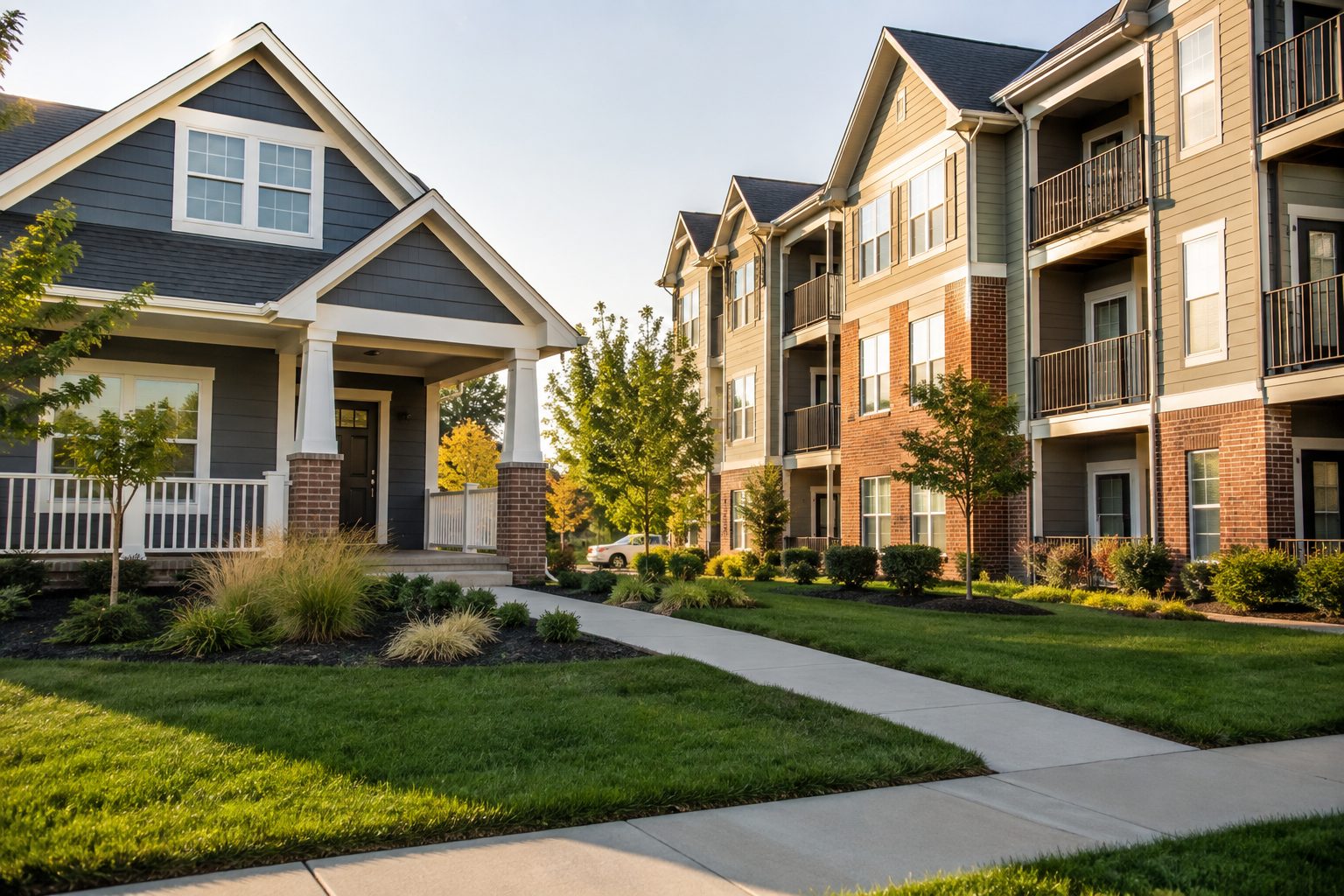
If you are considering buying an investment property in Southeast Michigan, one of the first decisions you may face is whether to buy a single-family home or a condominium.
Both can work as rental properties. But they come with different responsibilities, costs, restrictions, and long-term considerations.
If this would be your first rental property, I also recommend reading my guide to buying your first investment property in Southeast Michigan, which covers some of the broader decisions to consider before you start comparing individual properties.
I work with buyers throughout Southeast Michigan, including Ann Arbor, Canton, Plymouth, Northville, Novi, Farmington Hills, Livonia, and surrounding communities. One thing I encourage investment-minded buyers to do is look beyond the purchase price and projected rent. The property itself is only part of the investment. How it can be used, maintained, financed, and eventually sold matters too.
Here are some of the practical differences worth considering before you buy.
Single-Family Homes as Investment Properties
A single-family home typically gives an owner more control over the property.
You generally have direct responsibility for the home, exterior, yard, and major systems. That means more maintenance, but it also means fewer association-level restrictions to work around.
Depending on the property and municipality, a single-family home may give an investor more flexibility when it comes to improvements, maintenance decisions, and how the property is managed.
Potential Advantages of a Single-Family Rental
More control over the property
Without a condo association governing many exterior decisions, owners generally have greater control over repairs and improvements, subject to local ordinances, deed restrictions, and any applicable homeowners association.
No monthly condo association fee
There may still be HOA fees in some subdivisions, but a traditional single-family home does not usually have the same type of monthly association fee found with many condominiums.
Broader resale possibilities
When you eventually sell, the property may appeal to both future owner-occupants and other investors, depending on the home and market conditions.
More control over maintenance timing
If the roof, siding, driveway, landscaping, or another component needs attention, you typically make those decisions yourself rather than waiting for an association.
That independence can be valuable, but it also comes with responsibility.
Potential Drawbacks of a Single-Family Rental
The biggest difference is usually maintenance.
As the owner, you may be responsible for:
- Roof and exterior repairs
- Lawn care and landscaping
- Snow removal
- Driveway and sidewalk maintenance
- Major mechanical systems
- Exterior insurance costs
- Unexpected repairs
A single-family property can therefore require more active management and a larger reserve for repairs.
For an investor comparing properties, I would not look only at the mortgage payment. I would also estimate realistic maintenance, insurance, property tax, vacancy, and capital improvement costs. If you are trying to estimate what ongoing ownership may actually cost, I also break down how much to budget for home maintenance in Michigan.
Condos as Investment Properties
A condo can look appealing because some exterior maintenance is handled by the condominium association.
Depending on the community, the association may maintain items such as landscaping, snow removal, common areas, exterior components, or other shared property.
That can reduce some of the day-to-day responsibilities of ownership. If you are still deciding whether condo ownership itself makes sense for you, my guide to the pros and cons of buying a condo with an HOA in Michigan covers some of the broader ownership considerations.
But there is an important issue investors should investigate before getting too far into a condo purchase:
Does the condominium association allow rentals?
Not every condo community does.
Rental Restrictions Can Change the Entire Investment
Condominium bylaws and association rules may limit whether or how a unit can be rented.
Depending on the community, there may be:
- Rental caps
- Minimum lease terms
- Waiting periods before an owner can rent
- Restrictions on short-term rentals
- Registration or approval requirements
- Limits on the number of leased units
The exact rules vary by association.
This is why I would not recommend assuming a condo can be used as an investment property simply because another unit in the development has been rented.
The current condominium documents should be reviewed carefully during the purchase process.
Condo Association Fees Need to Be Part of the Math
A condo’s monthly association fee affects your ongoing carrying costs.
For example, if two properties generate similar rent but one has a substantial monthly association fee, their actual cash flow may look very different.
At the same time, comparing the fee alone can be misleading.
You also need to understand what the fee covers.
An association fee that includes certain exterior maintenance, snow removal, landscaping, water, or other services may offset expenses you would otherwise pay directly with a single-family rental.
The better question is not simply:
“How much is the HOA fee?”
It is:
“What am I paying for, and how does that affect the property’s total operating cost?”
Do Not Overlook Special Assessments
Condo investors should also pay attention to the association’s financial condition and the possibility of special assessments.
A special assessment may be charged when an association needs additional money for a major repair or project that is not sufficiently covered by its existing reserves or operating budget.
Depending on the community, this could involve items such as roofs, roads, siding, balconies, or other common elements.
Before buying, available association documents may provide useful information about:
- Current association fees
- Recent or pending assessments
- Reserve funds
- Planned capital projects
- Association financial statements
- Owner responsibilities versus association responsibilities
These documents do not predict every future expense, but they can help you better understand what you are purchasing.
Financing May Be Different for a Condo
Financing a condo can involve considerations that do not apply in exactly the same way to a single-family home.
Depending on the loan program and property, a lender may review factors involving the condominium project in addition to the buyer’s own financial qualifications.
Investment-property financing can also differ from financing a primary residence, including requirements involving down payment, interest rates, reserves, and qualification.
Because lending guidelines can change and individual circumstances vary, it is worth discussing the specific property and intended use with a qualified lender before making assumptions about financing.
Property Taxes Matter Too
Property taxes are another important part of evaluating an investment property in Michigan.
Do not assume the seller’s current tax bill will necessarily be your future tax bill.
Michigan property taxes involve taxable value, assessed value, and Proposal A rules. A transfer of ownership can affect taxable value, and the property’s use may also affect applicable exemptions. If you want to understand those terms in more detail, I explain how property taxes work in Michigan and why buyers should be careful about relying on the seller’s current tax bill.
For an investment purchase, I recommend estimating future property taxes rather than simply inserting the current owner’s tax amount into your cash-flow calculation.
A local tax assessor or other appropriate tax professional can help verify property-specific questions.
Which Is Easier to Manage?
If minimizing exterior maintenance is important to you, a condo may be appealing.
If having more direct control over the property is the priority, a single-family home may be a better fit.
Neither automatically means “easy.”
A condo association may handle certain exterior responsibilities, but you still have responsibilities as a landlord and property owner. A single-family home gives you more independence, but you are also responsible for more of the property’s upkeep.
The right choice depends partly on how involved you want to be.
What About Resale?
It is worth thinking about your exit strategy before you purchase.
Ask yourself:
- Who might eventually buy this property?
- Is the property likely to appeal primarily to investors, or could it also appeal to future owner-occupants?
- Are there association restrictions that could affect future buyers?
- Are there property characteristics that could make resale easier or more difficult?
- How long do I realistically expect to own it?
No one can guarantee future appreciation or resale demand. But thinking about the eventual sale before buying can help you evaluate an investment more carefully.
Single-Family Home vs Condo: A Practical Comparison
| Consideration | Single-Family Home | Condo |
|---|---|---|
| Exterior maintenance | Usually owner responsibility | Often partly handled by association |
| Monthly association fee | Sometimes none or lower HOA fee | Common |
| Rental restrictions | May be fewer, but local rules still apply | Association restrictions may apply |
| Control over property | Generally greater | Subject to association rules |
| Special assessments | Generally not a condo issue, although HOA assessments may exist | Possible |
| Association financial review | Usually not applicable unless there is an HOA | Important |
| Resale considerations | Often broader buyer pool | Depends partly on project and restrictions |
| Management involvement | Often more hands-on | May reduce some exterior responsibilities |
These are general differences. The actual property documents, local ordinances, financing, insurance, taxes, and association rules should be reviewed for the specific property you are considering.
Before Buying an Investment Property in Southeast Michigan
Before writing an offer, I would want an investor to have a reasonably clear picture of the property’s numbers and restrictions.
That includes looking at:
- Expected rent based on appropriate market information
- Estimated mortgage payment and financing terms
- Property taxes
- Insurance
- Association fees, if applicable
- Maintenance and repair reserves
- Vacancy assumptions
- Property management costs, if applicable
- Rental restrictions
- Municipal rental requirements
- Potential near-term capital expenses
For a condo, I would also want to understand the association documents and financial information available for review.
For a single-family home, I would pay particularly close attention to the condition and expected life of major components such as the roof, HVAC, windows, foundation, driveway, and other items that could become significant owner expenses.
A professional inspection can help you better understand the property’s condition before moving forward. My guide to the Michigan home inspection process explains what buyers can generally expect during that stage of a purchase.
Which Is the Better Investment?
There is no universal answer.
A well-bought condo with reasonable association costs and rental-friendly rules may make more sense than a single-family home with significant deferred maintenance.
On the other hand, a single-family home with manageable expenses and strong long-term usability may be more attractive than a condo with high fees or restrictive rental rules.
I would rather compare the actual properties than decide in advance that one property type is always the better investment.
Final Thoughts
Buying an investment property is different from choosing a home primarily for yourself.
You are still evaluating location, condition, and price, but you are also looking at operating costs, restrictions, maintenance exposure, financing, rental potential, and the eventual exit strategy.
If you are considering a single-family home or condo as an investment property in Ann Arbor, Canton, Plymouth, Northville, Novi, Farmington Hills, Livonia, or elsewhere in Southeast Michigan, I can help you evaluate the real estate side of the decision and identify property-specific questions worth investigating before you commit.
For financial, tax, legal, or investment advice, you should also consult the appropriate qualified professional.
The goal is not simply to find a property you can rent.
It is to understand what you are buying before you buy it.