Facebook
 X
X
 Pinterest
 Copy Link
When buyers begin looking at homes in Michigan, one number that often raises questions is the property tax amount.
Two homes with very similar prices can sometimes have noticeably different tax bills. Buyers also occasionally hear that property taxes may change after a purchase, which can create uncertainty about what their future monthly payment might look like.
Understanding how Michigan property taxes work can help buyers plan more accurately and avoid surprises after closing, especially when learning the first time home buying process in Michigan.
Below are the key pieces that home buyers in Southeast Michigan typically want to understand before making a purchase.
Why Property Taxes Can Look Different From One Home to Another
In Michigan, property taxes are not calculated directly from the current purchase price of the home.
Instead, taxes are based on a value called the taxable value, which is determined by the local assessor.
One important detail is that taxable value is limited in how much it can increase each year while the same owner holds the property. Because of this limitation, a homeowner who has owned a property for many years may be paying taxes based on a lower taxable value than the home’s current market value.
As a result, buyers may sometimes see a property listed with relatively low taxes even though nearby homes of similar size have higher tax bills.
What Happens to Property Taxes After a Home Is Sold
In Michigan, when a property transfers to a new owner, the taxable value is usually uncapped in the following year.
This means the taxable value can adjust closer to the property’s current assessed value rather than remaining at the capped level that the previous owner had.
Because of this adjustment, the future property taxes for the new owner may be higher than what the seller is currently paying.
This is one reason buyers should be careful about relying only on the current tax amount shown in a listing. That number reflects the seller’s tax situation, not necessarily what the next owner will pay.
Reviewing a potential future tax estimate is often an important step when evaluating a property.
Understanding Assessed Value, SEV, and Taxable Value
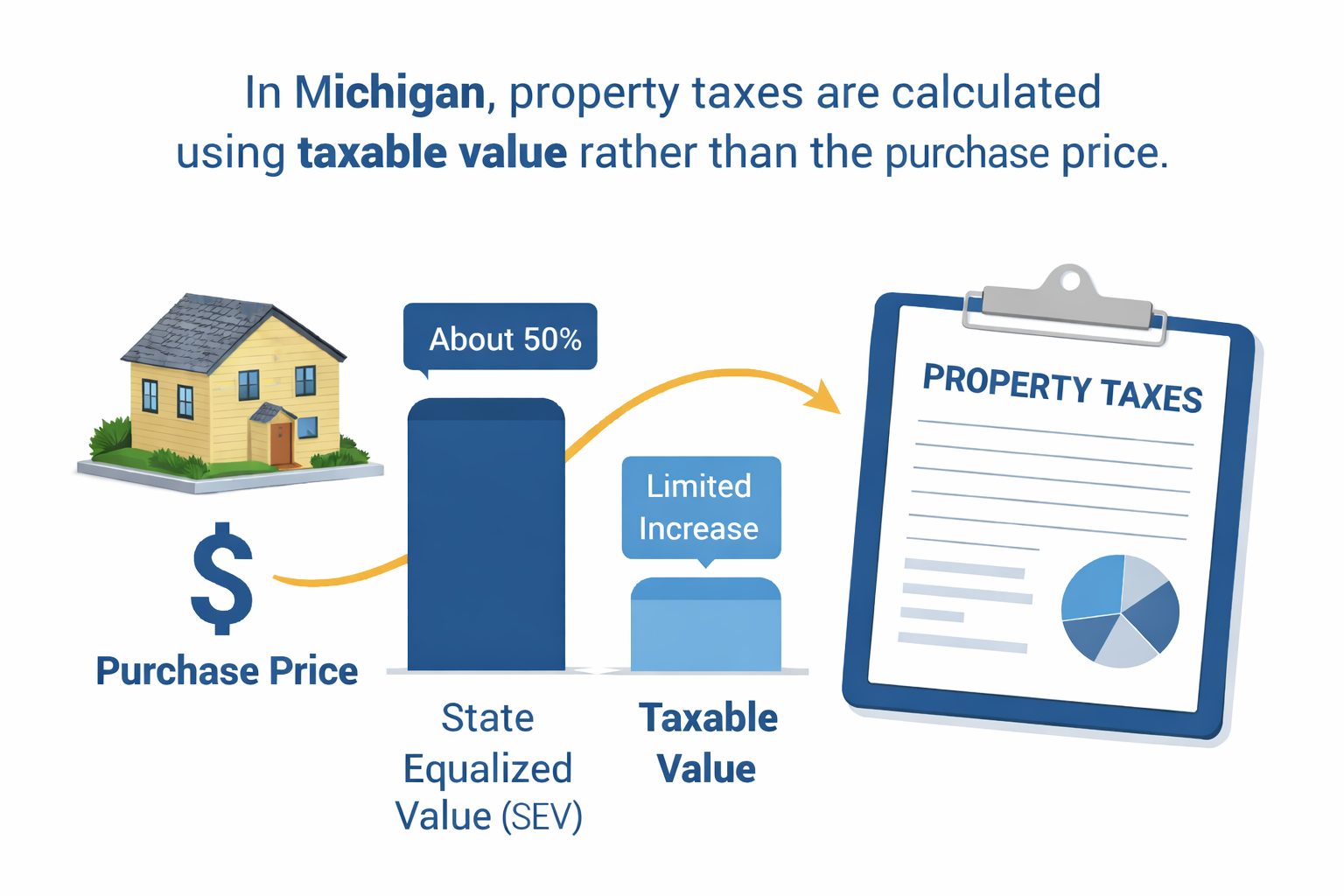
In Michigan, property taxes are calculated from taxable value rather than the home’s purchase price.
Michigan property taxes involve several terms that buyers may see on tax records, and some of these values are also connected to how homes are evaluated during the home appraisal process in Michigan.
State Equalized Value (SEV)
This number is typically about half of the property’s estimated market value.
Assessed Value
In Michigan, the assessed value is generally the same as the SEV.
Taxable Value
This is the value that property taxes are actually calculated from. While the same owner holds the property, increases in taxable value are limited by state law.
After a home is purchased, the taxable value may adjust closer to the SEV.
The Role of Local Millage Rates
Property taxes are also influenced by the local millage rate, which is determined by local governments and school districts.
Millage rates vary between communities. Because of this, two homes with similar prices may have different tax bills depending on the location.
This is something buyers often notice when comparing homes across areas such as Ann Arbor, Plymouth, Canton, Northville, Novi, or other parts of Southeast Michigan.
Estimating Property Taxes When Buying a Home
While the exact future tax amount cannot always be known in advance, buyers can often estimate it by reviewing:
• The current SEV
• The current taxable value
• Local millage rates
• Whether the taxable value will likely uncap after the purchase
Local assessor offices and county websites sometimes provide tax estimator tools that can help buyers run these numbers.
Because tax situations can vary from property to property, it can also be helpful to review the information carefully during the home search process and again after an offer is accepted as part of the Michigan home purchase process after an offer is accepted.
How Property Taxes Affect Monthly Payments
For buyers using a mortgage, property taxes are usually included in the monthly payment through an escrow account.
Each month, the lender collects a portion of the estimated yearly tax amount along with the mortgage payment. The lender then pays the tax bill when it becomes due.
Because of this, higher property taxes can increase the monthly housing payment even if the purchase price stays the same.
Looking at the full monthly payment, rather than just the purchase price, can help buyers compare homes more realistically, especially when reviewing financing terms and financing contingencies in Michigan purchase agreements.
Why Buyers Often Review Taxes Early in the Process
Property taxes are a meaningful part of the overall cost of owning a home.
A property that appears affordable at first glance may have higher taxes that affect the monthly payment. In other cases, a home with a slightly higher purchase price may have lower taxes depending on the history of the property.
Understanding these details early helps buyers make more informed decisions and compare properties more accurately.
Frequently Asked Questions About Property Taxes in Michigan
Do property taxes increase after buying a house in Michigan?
They can. When a property sells, the taxable value may uncap in the following year, which can increase the property tax amount for the new owner.
What is SEV in Michigan property taxes?
SEV stands for State Equalized Value. It is typically about half of a property’s estimated market value and is used as part of the tax calculation process.
Why are property taxes different between similar homes?
Taxes depend on taxable value and local millage rates. If one owner has held a property for many years, their taxable value may be lower than a recently purchased home.
Are property taxes included in mortgage payments?
In many cases they are. Lenders often collect property taxes monthly through an escrow account and pay the tax bill when it becomes due.
Final Thoughts
Property taxes are an important part of the home buying process in Michigan and are one of the factors buyers often consider when deciding whether it makes more sense to rent or buy in Southeast Michigan.
Taking the time to understand taxable value, millage rates, and how taxes may change after a purchase can make the process much easier to navigate.
If you are looking at homes in Southeast Michigan and want help estimating property taxes on a specific property, I am always happy to walk through the numbers and help you understand what the full monthly picture might look like before moving forward.