Facebook
 X
X
 Pinterest
 Copy Link
Many people across Southeast Michigan eventually reach the same question.
Should I keep renting, or is it time to buy a home?
It is a very common conversation I have with clients. Often the decision becomes clearer once we walk through what the two options actually look like in real numbers and real day to day life.
There is no single answer that fits everyone. The right choice depends on timing, finances, lifestyle, and how long someone plans to stay in the area.
If you are weighing the decision between renting and buying in Southeast Michigan, here are some of the factors buyers typically look at when deciding what makes the most sense.
Monthly Housing Costs in Southeast Michigan
One of the first comparisons people make is the monthly cost.
Rent is typically a fixed payment during the lease term. However, rent can increase when the lease renews, and those payments do not contribute toward ownership.
A monthly home payment usually includes several components:
• Mortgage principal and interest
• Property taxes
• Homeowners insurance
• Possible HOA dues depending on the property
In many Southeast Michigan communities, buyers are sometimes surprised to learn that a monthly mortgage payment may be comparable to rent depending on price range, interest rates, and the amount of the down payment.
This varies significantly based on loan terms and market conditions, so reviewing real numbers with a lender is an important step before making assumptions.
Length of Time You Plan to Stay
How long someone plans to stay in the area is often a key part of the decision.
Renting can make sense for people who expect to move within a short period of time or who prefer flexibility.
Buying tends to make more sense for those planning to stay in Southeast Michigan for several years. Over time, homeowners may build equity and spread closing costs over a longer period.
Many buyers I work with start exploring homeownership once they feel ready to stay in a particular community for the foreseeable future.
Building Equity Over Time
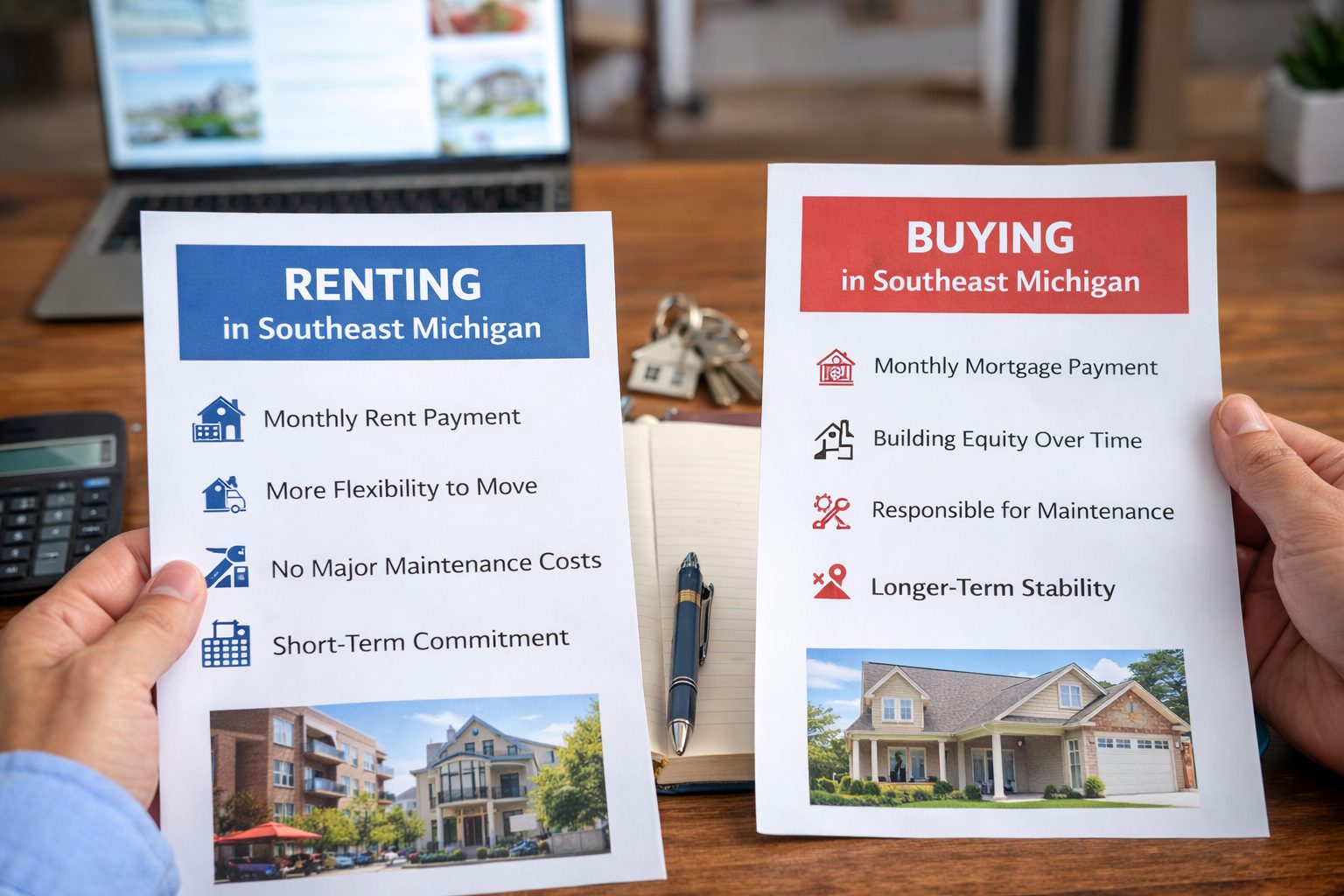
Many renters begin exploring homeownership by comparing the costs, responsibilities, and long term considerations of renting versus buying.
One of the biggest financial differences between renting and buying is equity.
When renting, the monthly payment goes entirely toward housing for that period of time.
With homeownership, a portion of each mortgage payment goes toward the loan balance. Over time this can build equity in the property.
Home values can rise or fall depending on market conditions, so equity growth is not guaranteed. However, many homeowners in Michigan view equity as part of their long term financial planning.
Some people later use equity when moving to another home or adjusting their housing situation.
Responsibilities of Homeownership
Another practical consideration is responsibility.
Renters typically rely on the property owner or management company for major repairs and maintenance.
Homeowners generally handle maintenance, repairs, and ongoing property upkeep themselves.
For some people this responsibility feels like freedom to manage and improve their own space. For others, the convenience of renting is still appealing.
Understanding the day to day responsibilities of owning a home is an important part of deciding whether the timing feels right.
Upfront Costs to Buy a Home in Michigan
The upfront investment for buying a home is typically higher than renting.
Renting usually requires:
• Security deposit
• First month’s rent
• Possible application fees
Buying a home may involve:
• Down payment
• Closing costs
• Home inspection
• Appraisal
The exact numbers depend on the purchase price, financing, and negotiations within the purchase agreement.
Some buyers in Michigan qualify for loan programs that allow smaller down payments, which is why many people speak with a lender early when exploring whether buying might be possible.
Current Housing Conditions in Southeast Michigan
Local market conditions can also influence the decision.
Housing supply, interest rates, and pricing trends can all affect the monthly cost of owning compared with renting.
Because these factors change over time, it is helpful to look at the current market rather than relying on outdated information or assumptions.
Reviewing recent sales and current listings in the areas someone is considering can provide a clearer picture of what options are available.
When People in Southeast Michigan Often Start Exploring Buying
Many renters begin looking more seriously at buying when a few things start happening:
• Rent increases over time
• They plan to stay in Southeast Michigan long term
• They want more control over their living space
• They want to begin building equity
Sometimes buyers simply want to understand their options before making a decision. That is often where a conversation can be helpful.
Frequently Asked Questions About Renting vs Buying in Southeast Michigan
Is it cheaper to rent or buy a home in Southeast Michigan?
It depends on several factors including the home price, interest rate, down payment, property taxes, and current rental prices in the area.
In some Southeast Michigan markets, monthly mortgage payments may be similar to rent depending on the price range and loan terms. In other cases, renting may cost less in the short term. The best way to compare is by looking at current listings, estimated mortgage payments, and local rental prices.
A lender can usually help estimate what a realistic monthly payment would look like for your situation.
How long should I plan to stay in a home for buying to make sense?
There is no universal rule, but many buyers consider purchasing when they expect to stay in the home for several years.
Buying a home involves upfront costs such as closing costs, inspections, and moving expenses. Staying in the home longer allows those costs to spread out over time.
Many buyers in Southeast Michigan begin exploring homeownership when they feel confident they will remain in the area for the foreseeable future.
Can I buy a home in Michigan with a small down payment?
Some loan programs allow buyers to purchase a home with a smaller down payment, depending on the loan type and the buyer’s financial profile.
Loan options, qualification requirements, and available programs can change over time. Speaking with a lender early in the process is often the best way to understand what options may be available.
What are the typical upfront costs when buying a home in Michigan?
Buyers typically plan for several upfront costs when purchasing a home, which may include:
• Down payment
• Closing costs
• Home inspection
• Appraisal
• Prepaid property taxes and insurance
The exact costs vary depending on the purchase price, financing, and the terms negotiated in the purchase agreement.
Is it a good time to buy a home in Southeast Michigan?
Market conditions change over time. Housing supply, interest rates, and buyer demand all influence the market.
Rather than trying to time the market perfectly, many buyers focus on whether purchasing makes sense for their personal timeline, finances, and long term plans.
Reviewing current listings, recent sales, and financing options can help provide a clearer picture of the market at a given time.
Should I talk to a real estate agent before deciding whether to buy?
Many people find it helpful to talk with a real estate agent early in the process, even if they are still deciding whether buying is the right step.
A conversation can help clarify current market conditions, typical price ranges in Southeast Michigan, and what the buying process would look like if someone decides to move forward.
Final Thoughts
Deciding whether to rent or buy is not simply a financial decision. It is also about lifestyle, timing, and long term plans.
The best way to evaluate the decision is to look at the numbers, the current market, and what your timeline might look like in Southeast Michigan.
If you are currently renting and wondering whether buying might make sense in today’s market, I am always happy to talk through the process and help you look at what your options might realistically look like.
Even a short conversation can often make the decision much clearer.