Facebook
 X
X
 Pinterest
 Copy Link
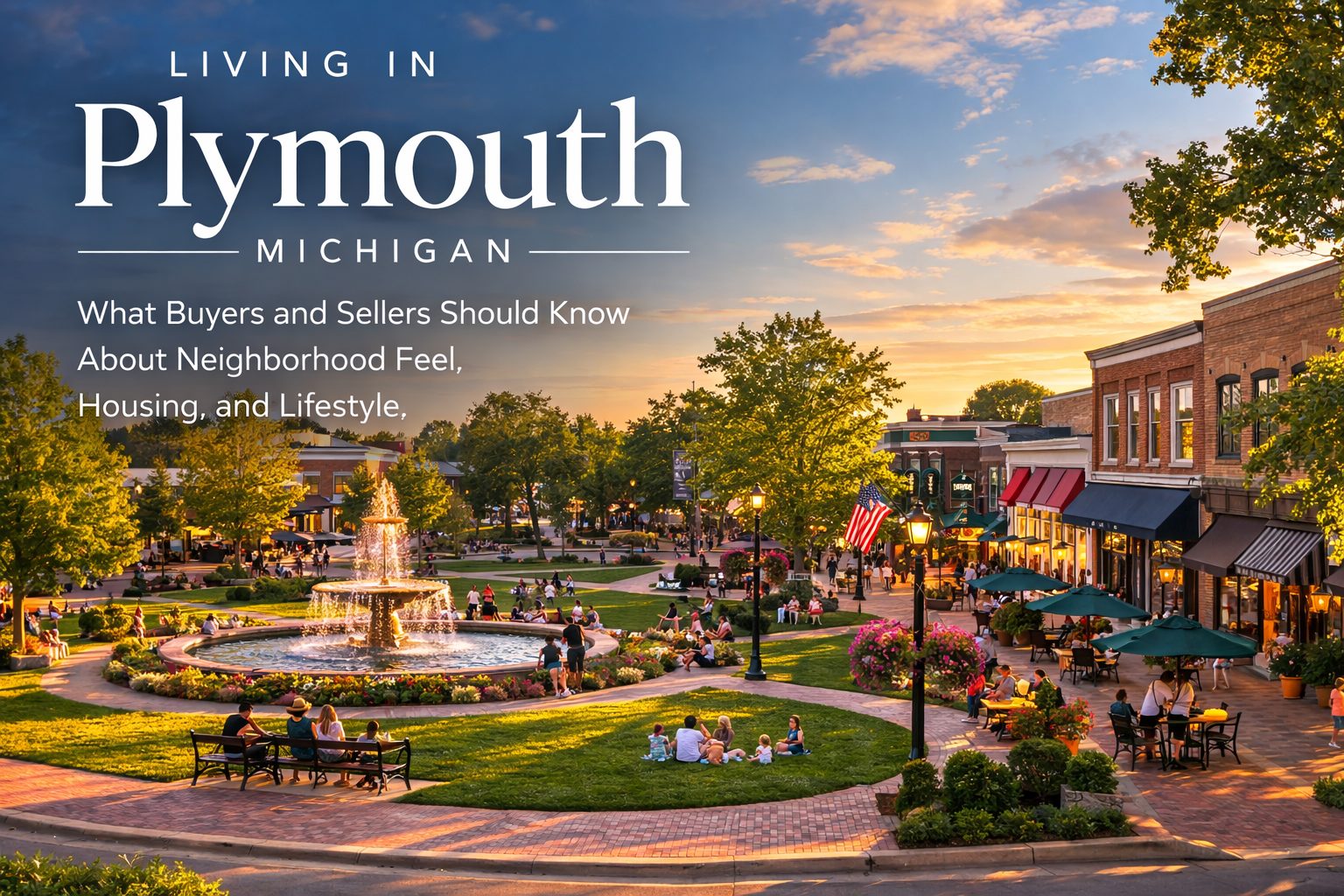
Plymouth, Michigan is one of the communities buyers often focus on when searching for homes in Western Wayne County and the surrounding Southeast Michigan area.
At first glance, people are usually drawn to Plymouth because it has a real downtown, established neighborhoods, and a strong sense of local identity. But once buyers begin comparing homes more closely, the questions tend to become more practical.
What does Plymouth actually feel like day to day?
What types of homes are common there?
How much does location within the city affect value?
What tradeoffs come with older housing stock?
For sellers, the question is a little different. What is it about Plymouth that continues to attract buyers even when inventory is competitive and expectations are high?
Understanding those details helps both buyers and sellers make better decisions in this market.
For people researching living in Plymouth Michigan, understanding how the neighborhoods, housing, and lifestyle fit together can make the decision much clearer.
What Living in Plymouth Feels Like
One of the biggest things that makes Plymouth stand out is its downtown.
Kellogg Park sits at the center of the city and functions as a gathering place for both residents and visitors. The surrounding downtown area includes local restaurants, small shops, services, and community events that take place throughout the year.
Events such as the Plymouth Ice Festival, Art in the Park, the Farmers Market, and Music in the Air bring people into the downtown regularly and contribute to the community’s active feel.
What many buyers notice when they spend time in Plymouth is that the city is built around that central area. Instead of everything revolving around major commercial corridors, Plymouth follows a more traditional pattern where neighborhoods surround a downtown core. Many streets have sidewalks and mature trees, and homes often feel established rather than newly built.
For buyers who value that type of setting, Plymouth often feels noticeably different from many nearby communities.
Many buyers searching online for homes in Plymouth Michigan are drawn to the city because of its walkable downtown and established neighborhoods.
Neighborhood Character
Plymouth is a relatively small city geographically, and that contributes to its overall feel.
The neighborhoods tend to be connected in a traditional street pattern, and the housing stock reflects decades of development rather than large sections being built all at once. As a result, buyers will see a mix of ranches, colonials, cape cod homes, bungalows, and condos rather than one consistent architectural style.
Some homes sit within walking distance of downtown, while others are in quieter residential pockets farther from the center of the city.
That difference can affect how a home feels day to day. Being close to downtown may mean easier access to restaurants, parks, and events, while other parts of the city may feel quieter and more residential.
There is also a historic district surrounding the Kellogg Park area. Certain exterior changes to homes in that district may require review by the Historic District Commission. Buyers considering homes near downtown may want to confirm whether a property falls within that area before planning exterior renovations.
Housing in Plymouth
Because Plymouth is already built out, buyers generally should not expect large amounts of new construction within the city itself.
Instead, the housing stock is made up largely of established homes that have been updated or renovated over time. That can create a lot of variety from one property to another. Buyers comparing Plymouth with nearby communities may also want to look at how housing styles differ across the region. If you’re exploring options, you may also find this helpful: New Construction vs Resale Homes in Southeast Michigan: What Buyers Should Know
Many buyers are drawn to Plymouth because homes often have more individual character than what they see in newer subdivisions. Mature trees, established landscaping, and neighborhood streets that developed over many years contribute to that appeal.
At the same time, older homes can come with practical considerations.
Some homes may have smaller closets, older basements, one car garages, or floor plans that reflect the time period when they were built. Updates may also have been done at different times, which means buyers should look carefully at the condition of major systems such as roofing, electrical, plumbing, and windows.
In Plymouth especially, it helps to evaluate homes based on both charm and functionality.
Parks, Events, and Local Amenities
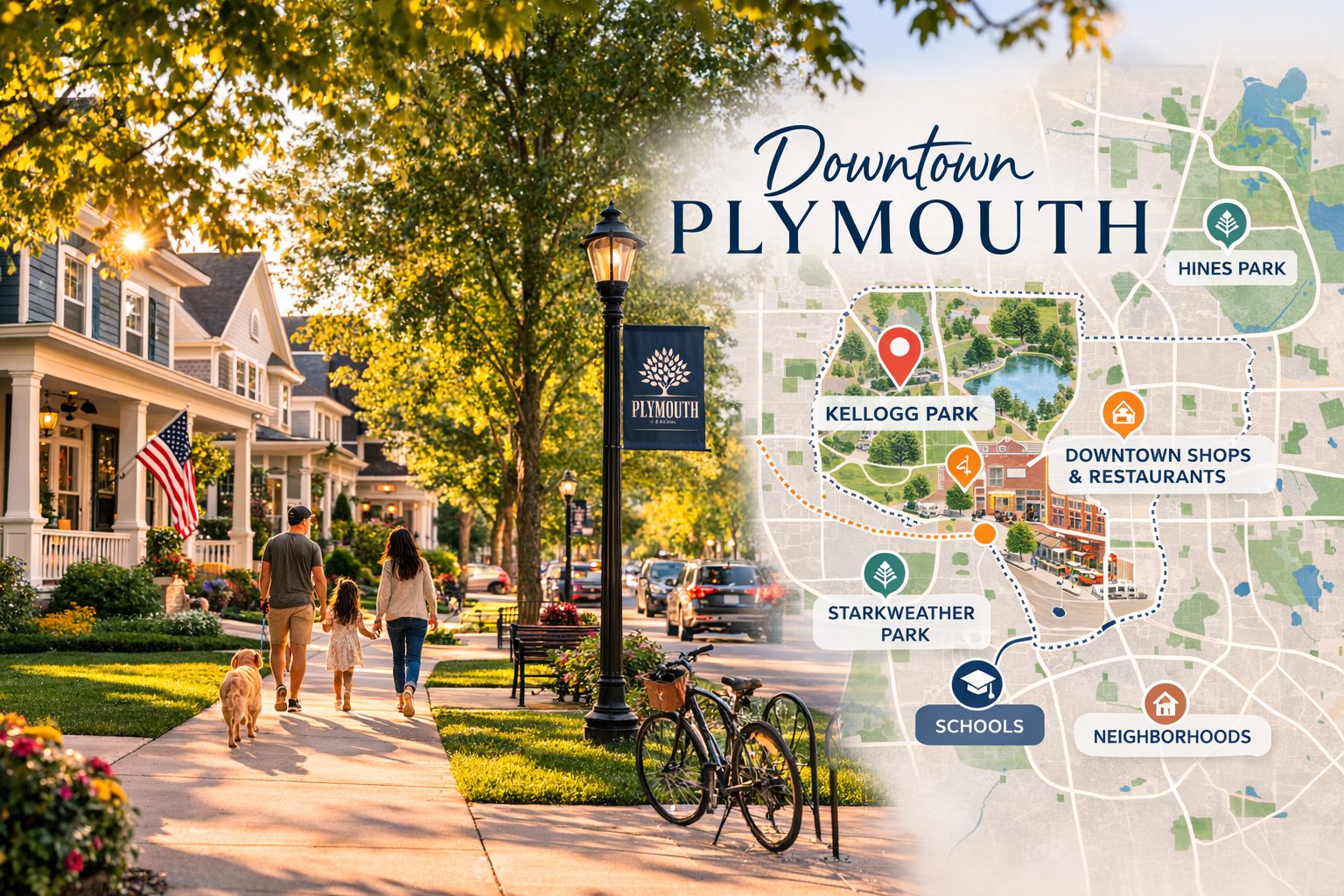
A simplified map of Plymouth, Michigan showing downtown, parks, and surrounding residential neighborhoods.
Another reason buyers stay interested in Plymouth is the range of community amenities.
The city maintains multiple parks and recreational spaces, including Kellogg Park, Starkweather Park, and Tonquish Creek Nature Walk. Recreation programming is offered through the Plymouth Cultural Center, and nearby Hines Park provides additional outdoor space for walking, biking, and recreation.
Seasonal events throughout the year also play a role in the lifestyle many residents enjoy. Community events bring people into downtown regularly and help create a sense of activity that buyers often notice when they visit the area.
For sellers, this lifestyle component can be an important part of how buyers evaluate a property. Buyers considering Plymouth are often paying attention not only to the house itself, but also to how the location connects to downtown, parks, and neighborhood life.
What Buyers Should Look At Carefully
When a buyer becomes serious about a particular home in Plymouth, the focus usually shifts from the city itself to the details of the property.
Older housing stock means it is important to look closely at the condition of the home, the layout, storage space, parking, and the overall flow of the property. Many buyers also want to understand what happens after their offer is accepted. If you are new to the process, this guide explains the next steps: What Happens After an Offer Is Accepted in Michigan. Two homes on the same street can feel very different depending on how they have been maintained or updated.
Buyers may also want to verify whether a home is located within the Kellogg Park Historic District if exterior renovations are part of their future plans.
School information should always be verified directly with the school district for any specific property. Plymouth is served by Plymouth Canton Community Schools, and the district provides resources that allow buyers to confirm school assignments and boundaries for individual addresses.
Taking the time to review these details helps ensure the home fits both lifestyle and long term needs.
What Sellers in Plymouth Should Understand
Plymouth is a community that buyers actively search for, but that does not mean homes sell automatically.
Buyers looking in Plymouth often have clear expectations. They tend to compare condition, layout, updates, and location within the city very carefully.
Homes that are priced realistically and presented well usually stand out quickly. On the other hand, if a property is priced based only on the reputation of the area without considering condition or competing homes, buyers often notice that as well.
In a market like Plymouth, accurate pricing and thoughtful positioning usually matter more than aggressive marketing language.
Frequently Asked Questions About Living in Plymouth, Michigan
Is Plymouth, Michigan a good place to live?
Many buyers are drawn to Plymouth because it offers a traditional downtown centered around Kellogg Park, established neighborhoods, and community events throughout the year. The city has a smaller, more connected feel than many surrounding communities, which is one reason it remains a popular location for buyers searching in Western Wayne County.
Are homes in Plymouth Michigan older or newer?
Most homes in Plymouth are part of an established housing stock rather than large new construction developments. Buyers will often see ranches, colonials, bungalows, and cape cod style homes built over several decades, many of which have been updated over time.
What parks are located in Plymouth Michigan?
Some of the most well known parks in Plymouth include Kellogg Park in the center of downtown, Starkweather Park along Tonquish Creek, and the nearby Hines Park recreation area which runs through the eastern edge of the community.
Final Thoughts
Plymouth has a distinct identity within Southeast Michigan.
The combination of a central downtown, established neighborhoods, parks, community events, and varied housing stock creates a setting that many buyers find appealing. At the same time, buying or selling in Plymouth still comes down to the specifics of the property, the condition of the home, and how it compares with other options in the area.
Looking beyond listing photos and understanding the details of the home and neighborhood is often what leads to the best decisions.
If you are considering buying or selling in Plymouth, Michigan and want to talk through how a specific property or neighborhood compares with others in the area, I am always happy to help.